
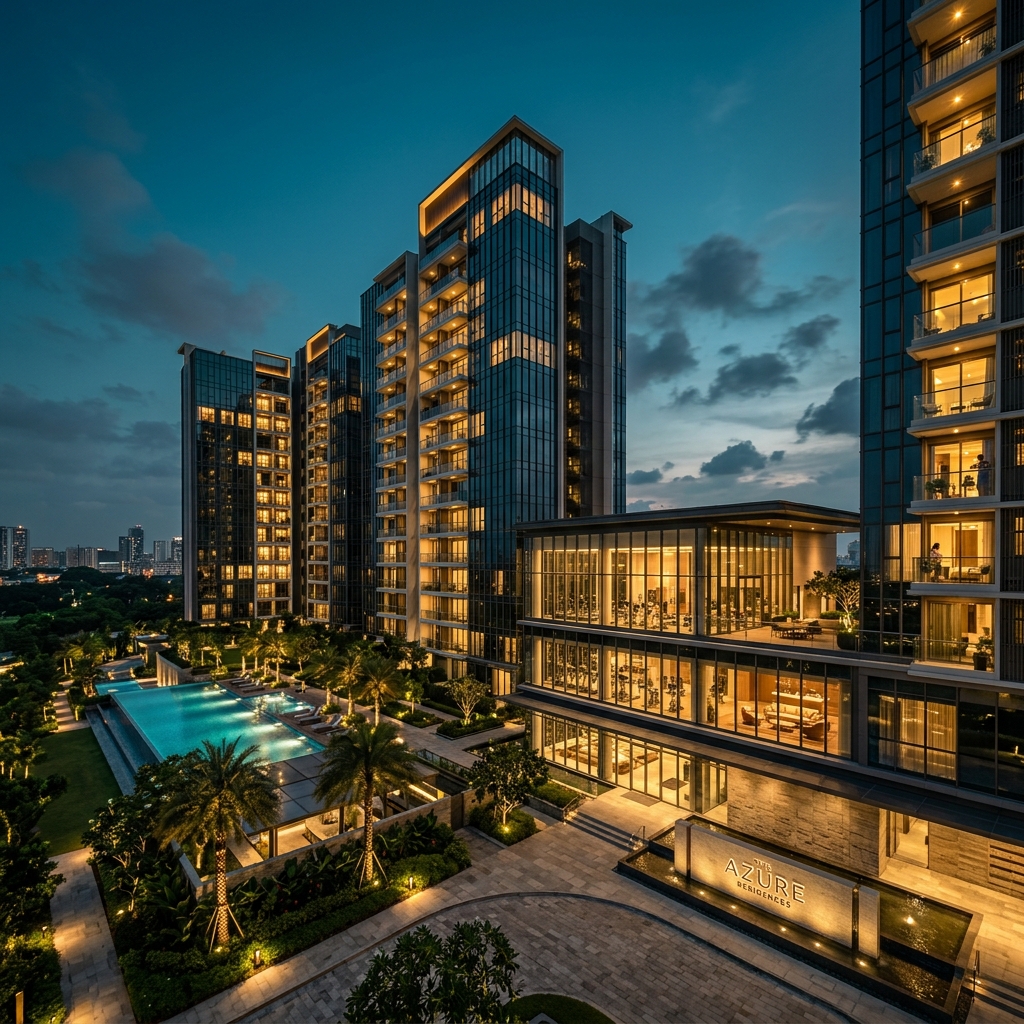
Introduction: Why Leasing Is the Default Strategy for Modern Business Growth
The way businesses occupy space has changed fundamentally over the past two decades. Where ownership was once treated as a marker of stability, leasing is now the deliberate choice of startups, established enterprises, and global brands alike. The reasoning is straightforward: a commercial property for lease delivers immediate access to prime locations, preserves working capital for growth, and provides the operational flexibility that ownership simply cannot match.
Whether the requirement is a corporate headquarters, a customer-facing retail outlet, a logistics hub, or a manufacturing facility, the leasing market today offers structured, transparent options for every business category and budget. From plug-and-play commercial office space for lease to high-footfall retail space for lease, large-format industrial property for lease, and purpose-built warehouse space for lease — businesses can match space to strategy without the long-term capital commitment of buying.
This pillar guide by 8BHK covers every dimension of leasing commercial real estate — types of properties, pricing structures, lease terms, due diligence, negotiation tactics, and category-specific considerations. If your business is evaluating its next office, store, warehouse, or industrial unit, this resource gives you the complete framework to choose a commercial property for lease that supports both immediate operations and long-term growth.
What Is a Commercial Property for Lease?
A commercial property for lease in Bhubaneswar is any non-residential property — office, retail unit, warehouse, industrial facility, showroom, restaurant space, or land — made available to a business for a defined period under a legally binding lease agreement. Unlike short-term rental arrangements, a lease creates a fixed-tenure occupancy with pre-agreed terms covering rent escalation, lock-in periods, renewal rights, maintenance responsibilities, and exit conditions.
Commercial properties for lease are governed by different legal frameworks than residential properties, with greater customisation flexibility, higher deposit norms, and longer typical tenures. The lease structure protects both parties: the landlord secures stable, long-term occupancy, while the tenant locks in favourable terms, makes brand and fit-out investments with confidence, and avoids the operational disruption of frequent relocations.
Lease vs Rent vs Buy: Which Model Is Right for Your Business?
Before evaluating individual properties, every business should make a deliberate choice about how it wants to occupy commercial space. The three core models — buying, leasing, and renting — each carry distinct financial and operational implications.
| Factor | Buying | Leasing | Renting |
|---|---|---|---|
| Capital Outlay | Heavy upfront purchase cost | Security deposit + first month's rent | Smaller deposit + first month's rent |
| Tenure | Permanent | 3–15 years (fixed term) | 11 months to 2 years |
| Customisation | Full freedom | Significant, with owner approval | Limited cosmetic changes only |
| Rent / Cost Stability | No rent; EMI + maintenance | Fixed with pre-agreed escalation | Subject to market at renewal |
| Exit Flexibility | Sale required, slow process | Lock-in applies; early exit penalty | High — short notice periods |
| Best Suited For | Stable enterprises seeking asset appreciation | Established businesses, HQs, flagship sites | Startups, market-testing, pop-up brands |
For most businesses operating in growth, expansion, or market-testing phases, a commercial lease property arrangement strikes the optimal balance between commitment and flexibility — locking in favourable terms while preserving the agility to scale or pivot.
Why Choose a Commercial Property for Lease Over Buying?
The structural advantages of leasing over owning have made commercial properties for lease the preferred occupancy model for the vast majority of growing businesses. The benefits are both financial and operational.
| Advantage | Strategic Impact |
|---|---|
| Capital Preservation | Capital stays available for hiring, marketing, R&D, and inventory rather than being locked into real estate |
| Access to Prime Locations | Operate from premium business districts that would be financially prohibitive to purchase outright |
| Operational Flexibility | Relocate, upgrade, or downsize as business needs evolve over time |
| Reduced Maintenance Burden | Structural upkeep and major repairs typically remain the landlord's responsibility |
| Tax Efficiency | Lease payments are fully deductible business expenses, improving overall tax position |
| Predictable Cash Flow | Fixed monthly outflow with pre-agreed escalation enables accurate long-term financial planning |
| Lower Risk Exposure | No exposure to real estate market downturns or property value depreciation |
For businesses that prioritise growth velocity and operational agility over real estate asset accumulation, a well-structured commercial property lease consistently outperforms ownership on every financial and strategic metric.
Types of Commercial Property for Lease
The commercial leasing market spans multiple distinct property categories, each designed for specific business functions. Understanding these categories is essential to shortlist the right property type for your operational model.
1. Commercial Office Space for Lease
Office space remains the largest segment of the commercial leasing market. A commercial office space for lease supports a wide range of business categories — corporate headquarters, IT and technology companies, professional services firms, consulting practices, startups, and back-office operations.
An office space for lease can be configured in several formats: fully furnished setups with workstations, meeting rooms, and shared amenities; semi-furnished spaces with basic infrastructure; bare-shell units requiring full fit-out by the tenant; co-working environments for solo professionals and small teams; and full-floor independent office building for lease arrangements for large enterprises seeking branded, dedicated facilities.
The choice of office format directly impacts move-in timeline, upfront cost, and brand presentation — making it one of the most consequential decisions in the leasing process.
2. Retail Building for Lease
Retail businesses depend on location, visibility, and footfall — and the right retail building for lease can fundamentally determine commercial success. Retail leasing covers a wide spectrum of formats, including high-street storefronts in prime commercial corridors, units inside shopping malls and complexes, standalone retail buildings with dedicated parking, and mixed-use developments combining retail with residential or office layers.
A purpose-fit retail space for lease must balance several factors: rent affordability relative to expected revenue, customer accessibility (parking, public transit, walk-in traffic), visibility from main thoroughfares, proximity to complementary businesses, and flexibility for signage and branding. The wrong retail location can suppress revenue regardless of product quality; the right one can multiply it.
3. Industrial Property for Lease
Manufacturing units, assembly operations, packaging facilities, and light-industrial businesses require purpose-built infrastructure that standard commercial spaces cannot provide. An industrial property for lease typically features heavy-duty electrical load capacity, reinforced flooring rated for machinery and inventory weight, high ceilings for stacking and equipment, wide-access entries for trucks and raw materials, and adequate ventilation and safety infrastructure.
Industrial leases tend to run longer than office or retail leases — typically 5–15 years — reflecting the significant machinery investment and operational continuity required by tenants. Industrial parks and dedicated industrial estates offer the additional advantage of clustered logistics, shared infrastructure, and statutory clearances already in place.
4. Warehouse Space for Lease
The expansion of e-commerce, third-party logistics, and organised retail has driven sustained demand for warehouse space for lease across every major commercial geography. Modern warehousing requirements extend well beyond floor area — businesses need clear-height loading bays, multiple dock doors, wide vehicle turning radius, 24/7 security infrastructure, fire safety compliance, and proximity to major transport routes and consumer markets.
Warehouse leases typically structure around per-square-foot rates with separate negotiations for common area maintenance, security charges, and utility costs. Large-format distribution hubs may also include provisions for cold storage zones, racking systems, and dedicated office space within the warehouse footprint.
5. Commercial Building for Lease (Mixed-Use and Standalone)
Beyond the four core categories above, the leasing market also includes whole-building options. A commercial building for lease arrangement gives a single tenant exclusive use of an entire property — useful for large corporates, branded hospitality concepts, healthcare facilities, and educational institutions that need branded, secure, and operationally controlled environments.
Commercial buildings for lease are also popular among financial institutions, banks, premium showrooms, and franchise headquarters that require strong external branding, dedicated parking, and operational independence from neighbouring tenants. Mixed-use buildings combining retail at ground level with office space above offer another compelling format for businesses with multi-channel needs.
6. Specialised Commercial Spaces
Several business categories require purpose-built environments that fall outside standard office or retail formats. Common specialised leasing categories include healthcare facilities (hospitals, diagnostic centres, multi-specialty clinics), banking and financial services branches with security infrastructure, automotive showrooms with wide frontage and service-bay layouts, hospitality units (restaurants, cafés, banquet halls), and education and training centres with classroom configurations.
Each of these specialised commercial properties for lease requires careful matching of layout, compliance, and infrastructure to the regulatory and operational standards of the sector.
Key Factors to Evaluate Before Signing a Commercial Lease
A commercial lease is a multi-year financial commitment with significant operational and legal implications. Evaluating these six factors thoroughly before signing protects your business from costly missteps.
Location and Accessibility
Location remains the single most influential factor in commercial leasing. Evaluate alignment with your target customer base, employee commute patterns, proximity to suppliers and partners, accessibility for deliveries and clients, and the surrounding business ecosystem. A well-located commercial property for lease in a secondary corridor often outperforms a poorly located unit in a premium one.
Total Cost of Occupancy
The headline lease rate is only one component of the true cost. Factor in security deposit (typically 3–10 months' rent), common area maintenance (CAM) charges, parking fees, electricity and utility deposits, interior fit-out and signage costs, annual escalation (commonly 5–10%), and GST on rent (18% if the landlord is GST-registered). Always evaluate total cost of occupancy — not base rent alone — when comparing options.
Lease Terms and Lock-In
Read the lease structure in detail before negotiating. Critical clauses include the lease duration, lock-in period and early-exit penalties, escalation schedule and cap, renewal rights and conditions, sub-lease and assignment rights, fit-out period and rent-free occupation terms, and obligations on lease termination. An aggressive escalation clause or an inflexible lock-in can convert an affordable year-one lease into an unsustainable year-four burden.
Infrastructure and Building Quality
Inspect the property for adequate electrical load and backup power provisions, high-speed internet and telecommunications infrastructure, water supply and drainage systems, fire safety compliance and emergency exits, lift access and structural integrity, and ventilation and air-conditioning capacity. For warehouse and industrial properties, additionally verify floor load ratings, ceiling height, vehicle access width, and loading-dock specifications.
Space Layout and Future Scalability
The space must support your current workflow and accommodate realistic growth over the lease tenure. Evaluate the floor plan for operational efficiency (cabin-to-open-plan ratios, retail display zones, kitchen and storage flow), expansion potential within the same building, and the cost of internal modifications to suit your specific layout needs.
Legal Verification and Documentation
Before signing any commercial property for lease, verify the property's ownership documents, commercial land-use approval, occupancy certificate, property tax payment status, and absence of pending litigation or encumbrances. The lease itself should be drafted on appropriate stamp paper, registered with the local sub-registrar (mandatory for leases over 12 months), and clearly document every commercial term agreed between the parties.
Commercial Lease Cost Structure: What Tenants Actually Pay
Many first-time tenants underestimate the true cost of leasing because they evaluate only the base rent. A realistic budget for any commercial property for lease should account for the full cost stack below.
| Cost Component | Typical Range | When It's Paid |
|---|---|---|
| Base Monthly Rent | Varies by property type and location | Monthly |
| Security Deposit | 3–10 months' rent | One-time, refundable on exit |
| Common Area Maintenance (CAM) | ₹10–₹50 per sq. ft. monthly | Monthly |
| GST on Rent | 18% (if landlord is registered) | Monthly with rent |
| Electricity / Utility Deposit | ₹5,000 – ₹50,000+ | One-time, with new connection |
| Interior Fit-Out | ₹500 – ₹3,000+ per sq. ft. | One-time, before move-in |
| Annual Escalation | 5–10% per year (standard) | Applied on each anniversary |
| Stamp Duty & Registration | Varies by state (typically 1–5% of annual rent) | One-time, at agreement signing |
Always request a complete cost breakdown in writing before signing any lease. A property that looks affordable on base rent can become significantly more expensive once CAM, GST, deposits, and fit-out are factored in.
Who Should Lease Commercial Property?
Leasing suits a wide spectrum of business types and growth stages. The categories below represent the businesses that benefit most from a commercial property for lease arrangement rather than ownership.
- Startups and early-stage businesses seeking minimal upfront commitment while building product-market fit and revenue stability
- Growing SMEs that need scalable office or operational footprints as headcount and revenue expand
- Corporate offices and IT companies requiring premium-location offices, modern infrastructure, and brand-grade environments
- Retail brands and franchise operators rolling out multi-location footprints across cities or geographies
- Banks, financial services, and insurance providers establishing customer-facing branches in high-trust commercial corridors
- Hospitals, clinics, and diagnostic centres needing partitioned, compliance-ready healthcare facilities
- Manufacturing, logistics, and warehousing operators requiring industrial and warehouse infrastructure at scale
- Hospitality and F&B businesses testing new markets or expanding into multi-outlet operations
- Educational and training institutions requiring classroom configurations and student-accessible locations
For each of these categories, leasing offers what ownership cannot — speed of deployment, capital efficiency, and the freedom to evolve.
Step-by-Step Process to Lease the Right Commercial Property
A structured search process reduces both time and risk when leasing commercial real estate. Follow this seven-step framework to move from requirement to signed agreement efficiently.
Step 1 – Define the requirement brief: Document business type, required square footage, preferred locations, must-have infrastructure, budget ceiling (inclusive of all occupancy costs), and target possession timeline.
Step 2 – Shortlist target localities: Identify two to three commercial corridors that align with your target customer base, workforce commute, and supply chain. Sector clustering — IT corridors for tech, high streets for retail, industrial estates for manufacturing — accelerates due diligence.
Step 3 – Browse verified inventory: Use a trusted platform like 8BHK to explore verified listings with accurate pricing, floor plans, photographs, and ownership confirmation. Compare at least five properties before shortlisting your top three.
Step 4 – Conduct site visits: Visit each shortlisted property in person. Assess natural lighting, ventilation, building condition, parking, surrounding business environment, and peak-hour accessibility — details that listings alone cannot fully convey.
Step 5 – Verify legal and financial documentation: Confirm ownership documents, commercial land-use approval, occupancy certificate, tax compliance, and freedom from encumbrance. Review the proposed lease line by line — escalation, lock-in, exit, fit-out terms, and maintenance responsibilities.
Step 6 – Negotiate commercial terms: Use comparable rents from your shortlist to negotiate the base rate. Equally important are the deposit amount, escalation cap, fit-out period, lock-in flexibility, and early-exit penalty terms. Negotiation is not adversarial — it is the calibration of a multi-year working relationship.
Step 7 – Sign and register the lease: Execute the lease on appropriate stamp paper and register it with the sub-registrar office (mandatory for leases exceeding 12 months). With 8BHK's end-to-end leasing support, the documentation-to-registration process is streamlined from negotiation to handover.
Common Mistakes to Avoid When Leasing Commercial Property
Even experienced businesses make avoidable errors when leasing. The most frequent mistakes — and how to prevent them — are listed below.
- Evaluating on base rent alone: The headline rate often hides significant CAM, GST, deposit, and fit-out costs that materially change the true cost of occupancy
- Skipping legal verification: Operating from a property without commercial land-use approval risks future eviction, penalties, and inability to secure trade licences
- Accepting boilerplate lease terms: Default agreements favour landlords; every clause — especially escalation, lock-in, and exit — should be reviewed and negotiated
- Underestimating fit-out timelines: Bare-shell units often require 30–90 days of interior work before occupancy; factor this into both budget and rent-free period negotiations
- Choosing prestige over function: A premium address with the wrong infrastructure can undermine operations more than a less prestigious but well-equipped alternative
- Overlooking exit clauses: Business needs evolve; rigid lock-in clauses with steep exit penalties can trap a business in a space that no longer serves it
- Not registering long-tenure leases: Unregistered leases exceeding 12 months are legally vulnerable and offer reduced protection in disputes
Each of these mistakes is preventable with structured due diligence and expert leasing support — both of which significantly improve outcomes over self-managed search processes.
Why 8BHK Is the Right Partner for Commercial Leasing
Navigating the commercial leasing market — across offices, retail, warehouses, industrial spaces, and specialised facilities — requires verified data, market expertise, and structured negotiation support. 8BHK is built to deliver all three.
- Verified-only listings: Every commercial property for lease on the platform is checked for ownership, commercial-use approval, current availability, and pricing accuracy — eliminating ghost listings and bait-and-switch properties
- Full category coverage: From commercial office space for lease and retail building for lease options to industrial property for lease, warehouse space for lease, and standalone commercial buildings for lease — every property category is represented
- Transparent cost disclosures: Lease rate, CAM, deposits, escalation, and fit-out expectations are presented upfront — businesses see total cost of occupancy before shortlisting, not after
- Market expertise: Deep knowledge of local commercial corridors helps match business type to the right zone and property grade — saving weeks of misaligned site visits
- End-to-end leasing support: From requirements briefing through site visits, negotiation, legal verification, documentation, and registration — 8BHK's team manages the full process
Whether the requirement is a 500-sq.-ft. cabin or a 50,000-sq.-ft. warehouse, every commercial lease property engagement receives the same rigour, transparency, and professional accountability.
Conclusion
Leasing has emerged as the default occupancy strategy for modern businesses — and the reasoning is structural, not circumstantial. A commercial property for lease delivers immediate access to prime locations, preserves working capital for growth investments, reduces operational risk, and provides the flexibility to scale or pivot as business needs evolve. From plug-and-play office space for lease and high-footfall retail space for lease to large-format warehouse space for lease and purpose-built industrial property for lease, the leasing market today covers every business category, scale, and strategic requirement.
The businesses that lease most successfully are the ones that evaluate the full cost of occupancy rather than headline rent, target locations matched to operational and customer needs, verify legal status before signing, and negotiate lease terms that leave room for growth. With verified listings, transparent pricing, market expertise, and end-to-end leasing support, 8BHK is the trusted partner for businesses securing the right commercial property for lease — at the right terms, in the right location, for the right strategic horizon.
FAQs – Commercial Property for Lease
1. What is a commercial property for lease?
A commercial property for lease is any non-residential property — including office space, retail outlets, warehouses, industrial units, showrooms, and commercial buildings — made available to a business for a fixed term under a legally binding lease agreement, with pre-defined rent, escalation, and tenure conditions.
2. What types of commercial properties can be leased?
The main categories include commercial office space, retail shops and buildings, warehouses, industrial properties, showrooms, restaurants, healthcare and specialised facilities, and standalone commercial buildings. Each category has distinct infrastructure, lease term, and pricing characteristics.
3. What is the difference between lease and rent?
A lease is typically a long-term arrangement (3–15 years) with fixed terms, registered legal documentation, and pre-agreed escalation. Rent usually refers to short-term arrangements (11 months to 2 years) with more flexibility but less rate stability and limited customisation rights.
4. Is leasing better than buying commercial property?
Leasing is the better choice for businesses prioritising operational flexibility, capital preservation, and access to premium locations. Buying suits stable enterprises seeking long-term asset appreciation and full ownership control. Most early-to-mid-stage businesses benefit significantly more from leasing.
5. What is the typical duration of a commercial lease?
Office and retail leases typically run 3–9 years, warehouse and industrial leases 5–15 years, and land leases 15–30 years. Lock-in periods of 1–3 years are common within the lease term, after which exit becomes more flexible.
6. What costs should I expect beyond base rent?
Beyond base rent, expect security deposit (3–10 months' rent), CAM charges, GST (18% if landlord is registered), electricity deposits, interior fit-out costs, stamp duty and registration fees, and annual rent escalation of 5–10%. Always request total cost of occupancy in writing.
7. Can lease terms be negotiated?
Yes. The base rent, security deposit, escalation cap, lock-in duration, fit-out period, and early-exit penalty are all routinely negotiable — particularly for longer lease commitments and well-documented tenant profiles. Negotiation is standard practice in commercial leasing.
8. What documents are required to lease commercial property?
Tenants typically need identity proof (Aadhaar/PAN), business registration documents (GST, MSME, or incorporation certificate), bank statements, and authorisation letters if signing on behalf of a company. Verify ownership documents, occupancy certificate, and commercial land-use approval from the landlord.
9. Is a leased commercial property eligible for GST registration?
Yes. A registered commercial lease agreement supports GST registration, business bank account opening, trade licence applications, and other formal business documentation that requires a verified commercial address.
10. How does 8BHK help businesses lease commercial property?
8BHK provides a verified portfolio of commercial properties across every category — offices, retail buildings, warehouses, industrial spaces, and specialised facilities. With transparent pricing, market expertise, and end-to-end leasing support from search to registration, 8BHK makes the process faster, safer, and more efficient than unverified broker-led routes.
Find the Right Commercial Property for Lease with 8BHK
Whether you need a plug-and-play commercial office space for lease, a high-visibility retail building for lease, a large-format warehouse space for lease, a purpose-built industrial property for lease, or a long-tenure office building for lease — 8BHK has verified listings, transparent pricing, and expert leasing support at every step.
Visit: https://8bhk.com/ or Contact our commercial leasing experts today.
Partner with 8BHK — your trusted name for commercial property leasing.